Pink Tiger Journey: 7 Essential Learnings for Confident 2026

A Story of Questions, Resistance, Proof and Why Clean Nutrition Had to Be Earned
Clean nutrition didn’t begin for us as a trend, a business idea, or a social media movement. It began as discomfort.
The kind of discomfort that lingers quietly, when everything looks correct on the surface, yet something feels unresolved underneath. Labels were neat. Claims were confident. verifications looked reassuring. But the more we looked, the more we sensed that appearance and assurance were not the same thing.
As consumers, we were constantly told we were eating better than ever before. As nutrition professionals, we were seeing a different reality, one where awareness was rising, but clarity wasn’t keeping pace.
People were trying harder. They were spending more. They were making “better” choices. Yet confusion remained, sometimes even increased.
That gap between what was promised and what was proven is where the Pink Tiger journey truly began.
Table of Contents
When “Clean Eating” Went Mainstream, But Understanding Didn’t
Over the last decade, the concept of clean eating has moved from niche wellness circles into everyday conversation. Ingredient lists became shorter. Sugar was questioned. Protein quality started to matter. Words like “organic,” “natural,” and “chemical-free” entered grocery aisles and dinner table discussions alike.
On the surface, this felt like progress.
People were no longer eating blindly. They were curious. They were engaged. They wanted to make informed choices for their health, their families, and their futures.
But beneath that awareness, something felt unsettled.
As clean eating gained popularity, its meaning became increasingly diluted. Marketing adopted the language faster than science could anchor it. Claims multiplied, but explanations didn’t. Consumers were encouraged to trust aesthetics, tone, and storytelling, not data.
We saw the same pattern repeating:
~ Labels reassured, marketing inspired, and evidence remained inaccessible.
~ Clean eating had gone mainstream, but understanding hadn’t.
Pink Tiger wasn’t created to challenge brands or undermine intent.
It was created to ask a simple, uncomfortable question:
Are the products we consume every day as clean as they claim to be, and how can we verify this?
Hard Truth #1: “Clean” Sounds Scientific, But It Isn’t
One of the earliest and most important realisations on this journey was also the simplest. The word clean has no universal scientific or regulatory definition. It doesn’t exist as a measurable standard. It isn’t bound by a single framework. Two products can sit side by side, both labelled “clean,” and differ dramatically in sourcing, processing methods, contamination risk, and long-term safety.
Over time, clean had become shorthand for trust, not proof.
This mattered more than it first appeared. When a word replaces verification, questioning stops. Consumers assume safety has already been established when, in reality, it hasn’t even been examined.
That’s when Pink Tiger made a conscious decision.
Clean would never be a claim for us. It would remain a question. And every question would demand data.
Hard Truth #2: The Journey Started With Doubt, Not Judgement
Pink Tiger did not begin with conclusions. It began with doubt. Not distrust but curiosity grounded in responsibility.
We didn’t approach this work assuming wrongdoing. We approached it assuming uncertainty. The earliest phase of the journey involved learning how testing truly works beyond surface-level assumptions.
We spent time understanding laboratory accreditation, analytical methods, margins of error, and where testing commonly fails or oversimplifies reality. We studied how often tests are done, what they omit, and how selectively results are shared.
The process was slow by necessity.
What surprised us wasn’t a dramatic revelation or a singular, shocking result.
It was how consistent the gaps were.
Across categories, we saw impressive branding paired with minimal independent verification. Claims were confident. Data was scarce. This wasn’t about one product or one company; it reflected a system where verification had become optional rather than expected.
That realisation shaped everything that followed.
Hard Truth #3: Most Claims Exist Without Independent Oversight
In today’s nutrition ecosystem, trust is often not earned.
If something looks premium, sounds scientific, or is endorsed loudly enough, consumers are expected to accept it as safe. Packaging has become the primary proxy for credibility.
But belief is not verification.
Without independent, third-party testing, claims remain unchallenged. Label accuracy can’t be confirmed. Contaminants stay invisible. Long-term exposure is rarely discussed because it requires effort, interpretation, and accountability.
Pink Tiger chose not to rely on assumptions.
We committed to independent testing without paid influence, selective reporting, or narrative adjustment. Results would stand as they were, even when they were inconvenient.
Data had to speak first. Comfort came second.
Hard Truth #4: What You Eat Daily Matters More Than What You Fear Occasionally
As our understanding deepened, exposure science changed how we viewed risk entirely.
Health risks are rarely loud or immediate. More often, they are quiet, cumulative, and overlooked. It’s not the rare indulgence that shapes long-term health; it’s what is consumed consistently, over the years.
Staples. Oils. Flours. Supplements.
These aren’t occasional choices; they are habits.
A product can meet regulatory limits and still contribute to cumulative physiological stress. Small exposures, repeated daily, may influence metabolism, inflammation, or organ function without triggering immediate symptoms.
This shifted our focus. Pink Tiger wasn’t interested in extremes. We were interested in everyday nutrition.
Clean nutrition stopped being about perfection and started being about reducing silent, repeated risk.
Hard Truth #5: Lab Reports Alone Don’t Create Clarity
As testing expanded, another challenge emerged, one that wasn’t immediately obvious.
Raw data doesn’t automatically lead to understanding.
Lab reports are technical by design. They present numbers without context, thresholds without lifestyle relevance, and results without explaining how often exposure occurs. For most consumers, this creates confusion, not clarity.
So Pink Tiger evolved.
Testing became only the first layer. Interpretation became essential. We began pairing lab results with nutrition science, toxicology research, and real-world consumption patterns. A value wasn’t just “high” or “low”; it was evaluated in context. Frequency, quantity, and duration began to matter as much as numbers themselves.
Clean nutrition stopped being framed as “safe versus unsafe.”
It became about risk, relevance, and repetition.
Hard Truth #6: Similar Products Don’t Mean Similar Quality
One of the most sobering lessons of this journey came from comparison.
Products that looked identical on the shelf often behaved very differently in the lab.
Across categories, quality varied far more than branding suggested.
Supplements demanded the highest scrutiny because products designed to improve health can quietly cause harm if quality slips.
Staples and flour highlighted how small inconsistencies matter when exposure is daily.
Cooking oils and ghee revealed how purity and oxidation directly affect metabolic health.
Packaged “better-for-you” foods frequently failed to match their narratives.
Again and again, the same truth surfaced:
Price, popularity, and positioning are not substitutes for safety.
Hard Truth #7: Clean Nutrition Is Not a Destination. It’s a Discipline
At some point, we stopped viewing clean nutrition as something to achieve.
- It isn’t a finish line.
- It isn’t a verification.
- It isn’t permanent.
Clean nutrition is shaped continuously by sourcing, processing, storage, transparency, and consumption patterns. Even well-made products can change over time if systems aren’t maintained.
There are no shortcuts. Only systems. And systems demand consistency, evidence, and accountability. That understanding defines Pink Tiger today.
What We Test And Why It Matters
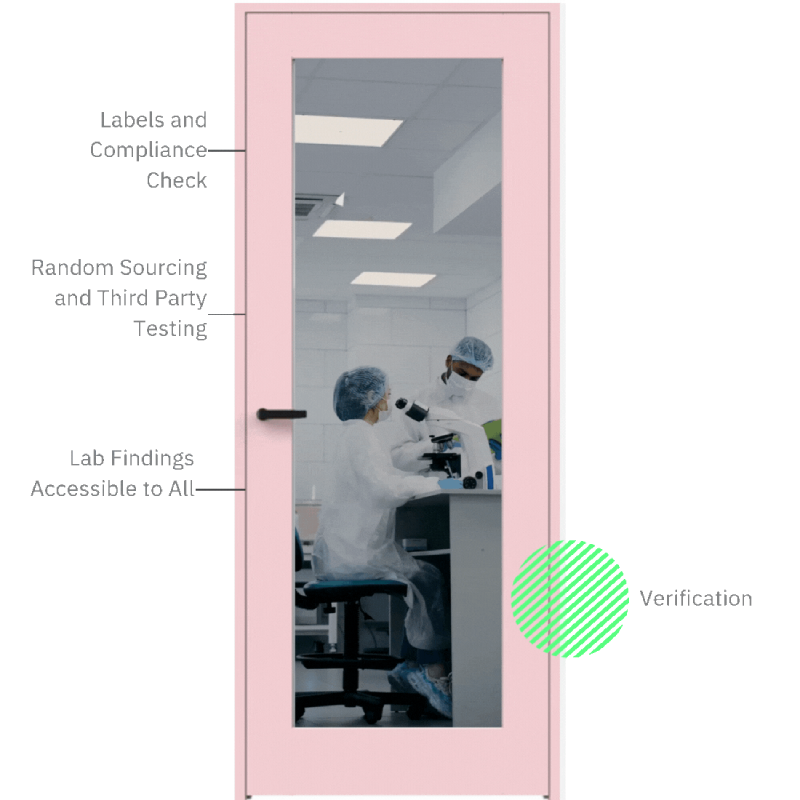
Every parameter we test is chosen with intention, not emotion. The goal is not to highlight what looks alarming on paper, but to focus on markers that science consistently links to long-term health outcomes. Clean nutrition, when viewed through a research lens, is less about isolated thresholds and more about what the body is exposed to repeatedly over time. That is why our testing framework prioritises cumulative impact rather than one-off extremes.
The parameters themselves are grounded in evidence, not assumptions:
Heavy metals are evaluated because low-level exposure can accumulate silently and contribute to metabolic, cardiovascular, and neurological stress over the years.
Pesticides and adulterants are assessed for their role in chronic exposure, especially in foods consumed daily.
Antibiotics and hormones are tested where relevant due to their potential influence on endocrine balance and resistance patterns.
Label accuracy is treated as a core quality marker because informed choices are impossible when labels don’t reflect reality.
Testing alone, however, is never the endpoint. Lab results generate data, but research provides the context needed to understand what that data actually means for everyday consumption. By interpreting findings through current scientific literature rather than fear-based narratives, the process remains balanced and constructive. Together, testing and research create clarity, empowering consumers to make informed decisions with confidence, not anxiety.
Education Became Non-Negotiable
Along the journey, another realisation became unavoidable: testing alone is not enough. Data without explanation can feel intimidating or misleading, leaving consumers unsure of what a result actually means for their daily lives. Numbers, thresholds, and technical terms may exist on a report, but without context, they rarely translate into confident decision-making.
That’s why education became non-negotiable for Pink Tiger. Testing had to be accompanied by understanding, so that information was empowered rather than confused. Clarity needed to travel with the data, not follow it later.
This shift shaped how Pink Tiger communicates today:
1. Translating lab results into practical, real-world relevance
2. Creating research-led blogs that explain why results matter, not just what they show
3. Addressing common nutrition myths around protein, fatigue, supplements, and safety
4. Bridging the gap between scientific evidence and everyday food choices
5. The goal was never to overwhelm with information, but to make science usable, so consumers could move from uncertainty to informed confidence.
What This Journey Taught Us
Across everything we’ve tested, one lesson repeats consistently.
Quality is uneven, even when labels look identical.
• Products that appear similar often differ in sourcing, processing, and purity.
• Ingredient lists and premium packaging don’t reliably reflect real quality.
Marketing simplifies what science shows is complex.
• Words like clean or natural reduce multi-factor quality into single claims.
• Long-term exposure, frequency of use, and processing are rarely addressed.
Without independent verification, belief replaces evidence.
• Consumers rely on claims they can’t verify.
• Decisions are guided by perception, not proof.
This is why independent testing and context matter, to turn trust into something earned, not assumed.
Why Pink Tiger Exists
This work was never about creating distrust.
It was about restoring confidence, confidence built on proof, not promises.
By standing independently between brands, laboratories, and consumers, Pink Tiger helps make nutrition choices calmer, clearer, and more informed.
Check out our Instagram Page to know more
A Final Reflection: Rethinking “Clean”
• Clean nutrition is not a label, a trend, or a one-time claim; it is a process that must be questioned, verified, and revisited over time.
• Words like clean or natural do not guarantee quality; only evidence and transparency can.
• What matters most is not occasional choices, but what you consume consistently and repeatedly.
• Independent testing and research provide context that labels and marketing often leave out.
• The Pink Tiger journey exists to make this process visible so that everyday decisions, from the oil you cook with to the supplement you trust, are guided by evidence, not assumptions.
One test. One insight. One choice at a time.
Frequently Asked Questions (FAQs)
1. What is the Pink Tiger Journey and why did it begin?
The Pink Tiger Journey began as a response to growing confusion in the clean nutrition space. As consumers and nutrition professionals, we noticed a widening gap between what food and supplement labels promised and what could actually be verified through evidence. While awareness around clean eating was increasing, transparency and accountability were not keeping pace. Pink Tiger emerged to address this gap through independent testing, research-backed interpretation, and consumer education. The journey is not about questioning intent or creating fear, but about asking better questions, validating claims with data, and helping people make more informed nutrition choices grounded in evidence rather than assumptions.
2. How is the Pink Tiger approach different from typical clean eating platforms?
Most clean eating platforms rely heavily on ingredient lists, certifications, or marketing narratives to define quality. Pink Tiger takes a different approach by prioritising independent, third-party testing and scientific interpretation. Instead of treating “clean” as a label, it treats it as a question that must be verified repeatedly. Results are not presented in isolation but explained using current research, real-world consumption patterns, and cumulative exposure science. This ensures that information is balanced, contextual, and actionable. The focus is not on declaring products as simply good or bad, but on helping consumers understand quality, risk, and relevance over time.
3. Why does Pink Tiger focus so much on everyday foods and supplements?
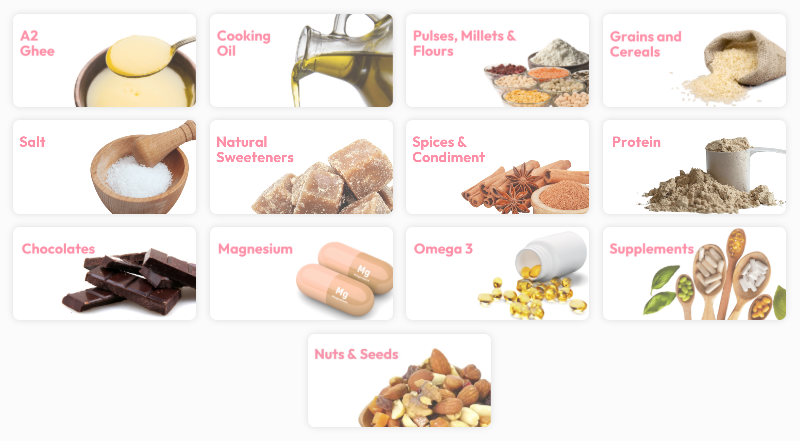
Everyday foods and supplements matter most because they are consumed repeatedly over long periods. Scientific research shows that health risks are often shaped not by occasional exposure, but by low-level exposure that accumulates over time. Staples like flours, cooking oils, ghee, and commonly used supplements form the foundation of daily diets, making their quality especially important. Pink Tiger focuses on these categories to understand long-term impact rather than short-term extremes. By examining what people consume regularly, the platform aims to reduce silent, repeated risks and support nutrition choices that align better with long-term health outcomes.
4. What kind of testing does Pink Tiger conduct and why is it important?
Pink Tiger works with accredited third-party laboratories to test products for parameters that matter over time. These include heavy metals, pesticides, adulterants, antibiotics, hormones (where relevant), and label accuracy. Each parameter is chosen based on regulatory relevance and emerging scientific evidence around cumulative exposure. Testing is important because many of these factors are invisible to consumers and cannot be assessed through labels alone. However, Pink Tiger goes beyond testing by interpreting results through current research, helping consumers understand what the data means in the context of frequency, quantity, and long-term consumption.
5. What does “confidence” mean for Pink Tiger moving into 2026?
Confidence for Pink Tiger is not about certainty or perfection, it is about clarity backed by evidence. After a year of learning, testing, and understanding patterns across categories, confidence comes from knowing what questions matter and how to interpret answers responsibly. Moving into 2026, this confidence reflects stronger systems, deeper research integration, and clearer communication with consumers. It means acting on proof rather than assumptions, refining processes rather than chasing trends, and continuing to prioritise transparency and education. The goal is to help consumers make nutrition decisions with calm assurance, not confusion or fear.