Spices Exposed: 7 Shocking Truths Every Household Must Know
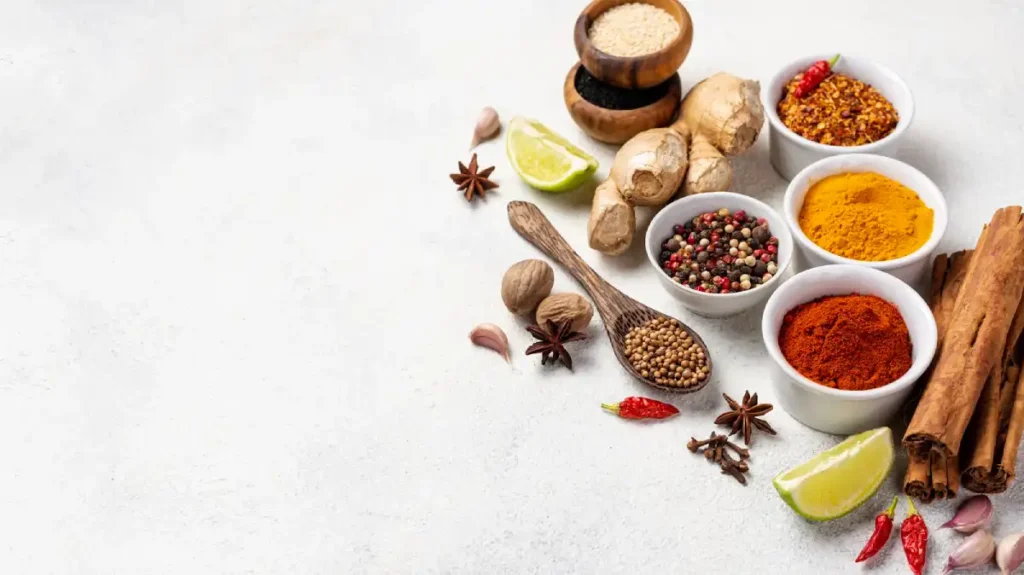
Imagine the vibrant pinch of turmeric in your curry, the tantalising sprinkle of cumin over roasted vegetables; spices bring our meals to life, rich in culture and tradition. But have you ever paused to consider what’s really in those tiny jars stacked in your kitchen?
The spice industry, despite its heritage and value, hides a troubling secret: adulteration and contamination. This may sound alarming, but understanding the truth about your spices is essential for your health.
Table of Contents
Spices Unmasked : What Your Kitchen Jar Isn’t Telling You?
Spices are the heart of Indian cooking. Imagine the vibrant pinch of turmeric melting into hot oil, the earthy aroma of cumin crackling in a tadka, or the sweet warmth of cardamom uplifting a dessert. These ingredients don’t just add flavour – they carry history, culture, healing properties, and identity.
But what if the very spices that make your meals wholesome and aromatic are silently harming you?
Behind the colourful labels and neatly packed jars, this industry hides a startling truth: adulteration is far more common than we realise. From artificial dyes to toxic heavy metals, your everyday masalas rarely tell the full story.
This blog reveals the science, the risks, and the solutions – backed by recent 2024–2025 research papers – so you can protect your kitchen and your health.
1. Why Spices Matter More Than You Think
They have shaped civilizations, ancient trade routes, and medicinal traditions. But beyond history, they hold remarkable therapeutic value.
Here’s how everyday spices quietly support your health:
▪️Turmeric & Black Pepper – A Healing Duo : Curcumin, turmeric’s golden compound, is poorly absorbed in the body. But when paired with piperine from black pepper, absorption increases by up to 2000%. This makes your humble haldi doodh or curry a natural anti-inflammatory powerhouse.
▪️Ajwain in Rotis : Ajwain supports digestion and reduces bloating, especially when consuming heavy grain-based meals like rotis or parathas. It acts almost like a built-in digestive enzyme.
▪️Hing (Asafoetida) in Dals : Hing reduces gas formation, enhances protein digestibility, and complements dals beautifully, especially for individuals prone to bloating.
▪️Saffron in Milk Sweets : Saffron enhances mood, supports vision, and adds a luxurious aroma. Its compounds such as crocin and safranal exhibit potential antidepressant effects.
▪️Star Anise in Stews : Beyond flavour, star anise contains shikimic acid – a precursor used in antiviral medications.
▪️Nutmeg & Mace in Desserts : Both spices promote calmness, aid sleep, and reduce oxidative stress, making them perfect additions to warm desserts or bedtime drinks.
In short, spices don’t just enhance taste – they improve digestion, immunity, metabolism, and mood. But these benefits hold true only when the spices are pure.
2. The Hidden Crisis: Adulteration in Everyday Spices
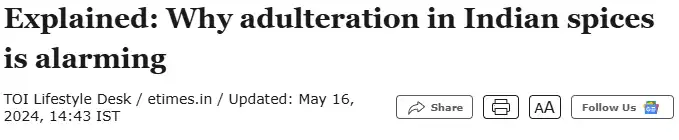
Many spices reaching our kitchens are far from pure. With rising demand and competitive pricing, some manufacturers maximise profits by adding fillers, dyes, and even toxic contaminants.
A 2024 FSSAI report highlighted:
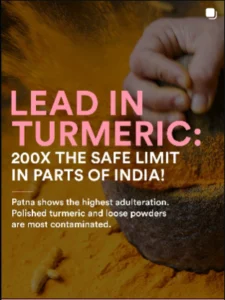
– Lead contamination in turmeric
– Pesticide residues beyond permissible limits in chilli powder
– Substandard quality in popular spice brands
When spices are adulterated:
- Their colour looks unnaturally bright
- Their aroma seems synthetic or inconsistent
- Their texture is overly fine or powdery
But the biggest danger lies in what you cannot see.
3. Common Adulterants Found in Popular Spices
Below is a consumer-friendly breakdown of what research has uncovered in Indian spices:
| Spices | Common Adulterants |
| Black pepper powder | Papaya Seed, starch, sawdust |
| Turmeric powder | Lead chromate, metanil yellow, chalk powder, yellow shop stone powder, starch |
| Chilli Powder | Brick powder, salt powder, artificial dyes, sand, saw dust, dried tomato skin |
| Hing | Soap stone, starch, foreign resin |
| Coriander powder | Animal dung powder, seed removed coriander |
| Oregano | Similar types of plant leaves or herbs |
| Curry Powder | Starch powder, sawdust |
| Cinnamon | Cassia substitution |
| Cumin | Grass seeds coloured with charcoal, immature fennel |
| Saffron | Dried tendrils of maize cob, sandalwood dust, tartrazine, coconut threads |
| Cardamom | Artificial colorant i.e., apple green and malachite green |
Source : Research Paper – Adulteration in Indian spices: An alarming concern and a silent health hazard1
Why do manufacturers adulterate spices?
To enhance colour artificially: Synthetic dyes are added to make spices look brighter, fresher, and more appealing, often disguising poor quality or age.
To increase bulk weight: Cheap fillers like starch, husk, talc, or sawdust are mixed in to increase quantity and boost profits without improving quality.
To reduce production costs: Manufacturers replace high-quality or expensive spices with cheaper substitutes, cutting costs while maintaining the appearance of the original product.
To mimic premium varieties: Lookalike ingredients or artificially treated spices are used to imitate premium versions such as cassia being sold as true cinnamon, misleading consumers into paying more for inferior products.
This practice is not just deceptive – it is dangerous.
But adulteration doesn’t stop there; heavy metals like lead, arsenic, or cadmium have been detected in some spices, often due to contaminated soil or processing. Certain pesticides used during cultivation may also leave residue, posing long-term health concerns.
4. The Real Health Risks: Heavy Metals, Pesticides & Toxic Dyes
Many recent scientific investigations (2024–2025) show that contaminated spices can cause serious long-term health effects.
Heavy Metals (Lead, Arsenic, Cadmium) : These metals enter spices due to:
– Contaminated soil
– Processing machinery
– Artificial dyes like lead chromate
Health risks include:
- Neurological damage
- Kidney strain
- Hormonal imbalance
- Developmental delays in children
- Cancer risk (long-term exposure)
A 2025 Food & Humanity study found high levels of lead chromate specifically in turmeric to increase visual appeal.
Pesticide Residues : Chilli, coriander, fennel, and cumin are often treated with pesticides. Poor post-harvest handling results in unsafe residue levels.
Health risks:
- Hormone disruption
- Fertility issues
- Liver stress
- Increased inflammation
Industrial Dyes : Chilli powder and turmeric are sometimes enhanced with synthetic dyes like metanil yellow and Sudan red, both linked to carcinogenic effects.
Cheap Fillers (Starch, Chalk, Sawdust) : These reduce nutritional value and may cause:
- Digestive irritation
- Allergic reactions
- Contamination from fungal growth
5. Simple Kitchen Tests for Adulterants
Wondering how to uncover the truth about your spices? While nothing beats advanced lab testing for complete certainty, you can perform some simple at-home tests to check for adulteration. Here are a few to try:
| Spices | Simple Kitchen Tests |
| Turmeric | Mix a teaspoon of turmeric in water. If it leaves a light yellow tint, it’s likely pure; a deep yellow indicates adulteration. |
| Chilli Powder | Sprinkle chilli powder into water; artificial colours start sinking into streaks. |
| Black Pepper | Drop a few black peppercorns into water; pure pepper sinks while adulterated seeds may float. |
| Asafoedita | Mix a small amount with water; pure asafoetida will form a milky solution without sediments. |
| Cloves | Place cloves in water; the genuine ones will sink, while the fake ones will float. |
| Cinnamon | Cassia bark in cinnamon can be spotted visually. It’s thicker with layered surfaces, while true cinnamon is thin, curls easily, and has a distinct aroma. |
| Cumin Seeds | Rub cumin seeds on your palms; if they turn black, they’re likely adulterated. |
| Mustard Seeds | Spread some on a plate; true mustard seeds are smooth with yellow insides; argemone seeds are rough, black, and white inside when pressed. |
NOTE : These tests can give quick clues but are not foolproof or scientifically validated. Only certified lab testing can confirm purity and safety.
6. Pink Tiger Verified : Choosing the Right Spices
In an uncertain world, the best way to protect yourself is to choose reputable brands committed to integrity and transparency. At Pink Tiger, we rigorously test products through independent labs to verify purity claims, checking for heavy metals and microbial threats. With us, you can be confident that the spices you use are wholesome and safe.

If your spice brand champions clean ingredients and zero artificial additives, Pink Tiger is your partner in building trust.
👉 Spice brands, if you’re doing the right work, fill out the form HERE and let’s explore how to bring your products into the Pink Tiger Verified space.
7. How to Choose Safe, Authentic Spices (Practical Checklist)
Choose Reputable Brands – Prefer brands that share transparent lab reports, pesticide data, or have third-party certifications like FSSAI-approved labs. This shows they test for purity, authenticity, and contaminants.
Check Colour & Texture – If a spice looks too bright, neon-like, or unusually uniform, it may contain added colours or fillers. Authentic spices usually have natural variation in colour and a slightly coarse, uneven texture.
Buy Whole Spices When Possible – Whole spices such as cumin, coriander, pepper, or cardamom are far less likely to be mixed with fillers. Grinding them fresh at home gives stronger flavour and ensures purity.
Avoid Ultra-Cheap Varieties – If the price seems too good to be true, it probably is. Extremely low-cost masalas often indicate adulteration, dilution, or poor-quality raw material.
Store Smartly – Keep spices in airtight glass jars, away from direct sunlight, heat, or moisture. Proper storage helps retain aroma and prevents fungal growth or clumping.
Replace Old Masalas – Spices lose volatile oils over time, making them weak in flavour and medicinal value. They may also absorb moisture, increasing the risk of spoilage, so refresh your stock every few months for best quality.
The Growing Concern: India’s Recent Alerts & Testing Failures
Recent national updates reveal alarming trends:
- Popular branded masalas failing safety tests
- States issuing public warnings (like the Bengaluru alert)
- FSSAI cracking down on unsafe batches
- Multiple recalls due to microbial contamination
This highlights the urgent need for consumer awareness and industry accountability.
Join the Movement: Stay Updated, Stay Safe
Pink Tiger is actively educating consumers about spice safety.
Join our WhatsApp community to discover new verified products and get exclusive updates. Click here to join
Conclusion: Let Your Spice Box Be a Source of Wellness, Not Worry
Spices are tiny, but their impact is enormous. They heal, flavour, nourish, and define Indian cuisine. But only pure spices carry the true essence of what they are meant to be.
Understanding adulteration is not about fear – it’s about empowerment.
By choosing verified, lab-tested, transparent brands, you ensure that:
- Your meals stay wholesome
- Your health stays uncompromised
- Your kitchen remains a place of safety and nourishment
Let your spice jars tell a story of purity, not hidden danger.
Frequently Asked Questions (FAQs)
1. How common is adulteration in Indian spices?
Adulteration is far more common than most consumers realise, with FSSAI and independent lab reports frequently detecting fillers, artificial colours, pesticide residues, and even toxic substances like lead chromate in everyday spices such as turmeric, chilli powder, cumin, and coriander. While not every brand is unsafe, the lack of strict, standardised testing across the industry allows these adulterants to go unnoticed, making spice contamination a recurring and widely overlooked issue.
2. Why do manufacturers adulterate spices?
The primary reason adulteration happens is simple: profit. By adding cheap fillers like starch, sawdust, husk, or leftover plant matter, manufacturers can increase the quantity of a spice without increasing costs, instantly boosting margins. Artificial dyes are then used to mask poor quality or mimic the bright, fresh colour consumers expect, making the product look more appealing than it truly is. In other cases, expensive spices are substituted with cheaper look-alikes, such as cassia being sold as true cinnamon or papaya seeds mixed into black pepper to cut costs even further. While these tactics may benefit manufacturers financially, they significantly compromise purity, nutritional value, and safety, exposing consumers to hidden contaminants and long-term health risks.
3. Is colour change during cooking a sign of adulteration?
Colour change can be a sign of adulteration, but it’s not always conclusive. When turmeric turns an unnaturally bright or fluorescent yellow in hot oil, or when chilli powder releases a dramatic burst of red colour into water, it may indicate the presence of synthetic dyes such as metanil yellow or Sudan red, which are commonly used to make spices appear fresher and more vibrant. Pure spices, on the other hand, typically show softer, more muted colour variations because their pigments come from naturally occurring compounds like curcumin or capsanthin. At the same time, natural differences in crop quality, region, and processing can also influence how a spice behaves when heated or mixed. This means colour change should be treated as an indicator—not a final verdict—and ideally paired with other checks or, for complete certainty, verified through certified lab testing.
4. Why do some spices clump together in the jar? Are they spoiled?
Clumping in spices is usually a result of moisture absorption rather than spoilage, especially in pure spices that don’t contain anti-caking agents. When exposed to humidity, natural oils and fine particles bind together, forming small lumps that can look unusual but are generally harmless. This is actually a sign that the spice hasn’t been treated with unnecessary additives to keep it free-flowing. As long as there’s no visible mould, odd colour change, or foul smell, the spice is typically safe to use. To minimise clumping and maintain freshness, store spices in airtight glass containers and keep them away from heat, steam, and sunlight, which accelerate moisture buildup.
5. How do artificial dyes in spices affect the body?
Artificial dyes in spices can have a significant impact on the body because they are chemical additives designed solely to enhance appearance, not support health. Synthetic colours like Sudan red, metanil yellow, and rhodamine are often used to make spices look brighter or fresher, but research links them to inflammation, digestive irritation, allergic reactions, and potential carcinogenic effects when consumed over long periods. Since these dyes are foreign compounds, the liver must work harder to detoxify them, which can place additional strain on the body—especially when such spices are eaten daily as part of regular cooking. Over time, this unnecessary chemical load may contribute to oxidative stress and disrupt overall metabolic balance, making it essential to choose dye-free, lab-tested spices for everyday use.
References :
1. Sahoo, J. P., & Sama, K. C. (2024). Adulteration in Indian spices: An alarming concern and a silent health hazard. International Journal of Adulteration., 8(9), 1–9. https://doi.org/10.54905/disssi.v8i9.e4ijad3043
2. Detect Adulteration with Rapid Tests. https://fssai.gov.in/upload/knowledge_hub/1878035b34b558a3b48DART%20Book.pdf
3. Isabel Cipriani-Avila, Luis Granda, Byron Acosta, Jhonnathan Villacis, Pablo Saavedra, Gabriela S. Yánez-Jácome, Natalia Carpintero – Salvador, Valeria Ochoa – Herrera, Diego Barona, Patricio Crespo, Verónica Pinos-Vélez, Lead chromate adulteration in Ecuadorian spices, Food and Humanity, Volume 5, 2025, 100659, ISSN 2949-8244, https://doi.org/10.1016/j.foohum.2025.100659.
4. Mohammad Hossein Nargesi, Jafar Amiriparian, Hossein Bagherpour, Kamran Kheiralipour, Detection of different adulteration in cinnamon powder using hyperspectral imaging and artificial neural network method, Results in Chemistry, Volume 9, 2024, 101644, ISSN 2211-7156, https://doi.org/10.1016/j.rechem.2024.101644.
5. Anand, S. (2024, June 15). FSSAI to take action against spice makers after Rajasthan finds some MDH, Everest products unsafe. ETHealthworld.com. https://health.economictimes.indiatimes.com/news/industry/fssai-to-take-action-against-spice-makers-after-rajasthan-finds-some-mdh-everest-products-unsafe/111013037