Protein Timing: 4 Proven Lessons to Boost Anabolic Window
Protein timing has long been one of the most debated topics in fitness. From the legendary post-workout shake rule to the fear of missing a narrow 30-minute anabolic window, we have heard it all. But with new research emerging in 2024-2025, the science behind when you eat protein is evolving, and the truth is far more practical than the old-school myths.
Table of Contents
Let’s Talk Protein Timing
If you’ve spent any time in a gym or chatted with fitness enthusiasts, you have probably heard the buzz about the “anabolic window.” The common belief is that you have a mere 30 to 60 minutes post-workout to consume some protein if you want to maximise muscle growth and repair. Miss that window, and your gains might slip away. But here’s the good news: modern science tells a different story.
Research now makes one thing clear: the anabolic window isn’t a narrow 30-minute countdown, it’s far more flexible than old-school fitness advice claimed. What truly drives muscle growth is how much protein you eat across the entire day and how strategically you spread it out. In this blog, we break down four high-impact, science-backed lessons that cut through the confusion and show you exactly how to optimise your protein timing, without obsessing over rushing to a shake after every workout.
Lesson 1: Total Daily Protein Intake Still Rules – The “Window” Is Wide
What recent science says
While protein timing can support better muscle recovery, the single biggest driver of progress is total daily protein intake. Hitting your ideal range (1.6-2.2 g/kg/day for most active adults) matters far more than obsessing over exact minutes post-workout.
However, bioindividuality and workout context change how much timing truly matters. People training early morning, late at night, older adults, or those doing fasted workouts may experience different needs. So while daily intake is the foundation, timing becomes relevant in specific scenarios, not universally.
This concludes that as long as you hit your daily protein needs, the exact timing of your intake becomes less critical. A broader meta-analysis from 2025 also confirmed this: when total daily protein was matched, timing didn’t significantly influence muscle growth or strength. Earlier studies even revealed that when you factor in total protein intake, the impact of timing mostly disappears.
What it means for you
Prioritise daily protein target (e.g. ~1.6-2.2 g/kg body weight for many lifters), rather than stressing over when you get it.
If you hit your protein goal across the day, missing a post-workout shake or having dinner a couple of hours later won’t derail your gains.
Think “protein throughout the day” rather than “chug immediately post-workout.”
Daily protein intake is the primary driver of results; timing only becomes important when the type of training, time of day, or individual circumstances make it relevant.
Lesson 2: The Anabolic Window Is More Like a Garage Door – Open for Hours After Training
Let’s debunk the 30-minute rule:
The old belief that you must drink a protein shake within 30 minutes has evolved. Research now shows the anabolic window is much broader, roughly 2 to 4 hours on both sides of your workout.
But here’s the nuance missing from older explanations:
✔ The anabolic window applies mainly to resistance training, not all exercise.
~ Strength training increases muscle protein synthesis, so timing moderately matters.
~ Cardio, walking, yoga, mobility sessions do not require aggressive protein timing. They don’t deplete amino acids the same way.
✔ The time of day changes how the anabolic window works.
~ Morning fasted workouts: Protein timing becomes more important because muscle has gone hours without amino acids.
~ Afternoon/early evening workouts: You likely have meals in your system, so the window is naturally covered.
~ Late-night workouts: Heavy protein meals close to bedtime may disrupt sleep.
✔ Older adults experience “anabolic resistance.”
~ They benefit more from thoughtful timing because their muscles respond better to evenly spaced, protein-rich meals.
So yes, the anabolic window exists, but it’s context-dependent, not universal.
This extended anabolic window primarily applies to resistance training. Cardio, yoga, walking, and mobility sessions do not require aggressive protein timing, and late-night sessions may not benefit from heavy post-workout meals.
Practical takeaway
Don’t panic if you cannot get protein immediately after training. A meal within a few hours or even just consistent intake across the day is usually sufficient.
Especially if you ate a protein-rich meal 1-2 hours before training, your muscles may already have available amino acids, reducing the need for an immediate post-workout meal.
For most gym-goers, the “anabolic window” is flexible; treat it like a garage door, not a blink-of-an-eye slot.
For late-night training, prioritise light, easy-to-digest protein if any at all, to avoid sleep disruption.
Sources : Healthline : What Is an Anabolic Window?
Lesson 3: Protein Distribution + Meal Timing Still Matter – Spread It Out
Why does how you spread protein matter?
Protein timing isn’t about rushing a shake, it’s about ensuring muscles get consistent amino acids throughout the day, especially with resistance training.
But an important distinction:
✔ Night-time protein supports circadian recovery, not late-night heavy eating.
A slow-digesting protein like casein before bed can support overnight repair because the circadian rhythm naturally prioritizes tissue rebuilding during sleep.
However: This does not mean eating a heavy meal after a late-night workout. If you finish training close to bedtime, choose light, easy-to-digest protein (10-20 g) so digestion doesn’t interfere with sleep.
✔ Training-type matters.
~ Resistance training → Protein spacing and timing are beneficial.
~ Cardio/yoga → No special timing required unless you’re doing long endurance sessions.
This helps keep your overall plan aligned with your body clock and your training style.
Night-time protein is helpful only when it supports recovery and doesn’t interfere with sleep. If your workout ends late at night, choose a light protein option or adjust dinner earlier. Night protein benefits mainly resistance training; cardio or low-intensity exercise does not require extra protein timing.
Sources : Fitness Rec. : The Anabolic Window Myth evidence based post workout nutrition for athletes
Application – How to spread your protein intake effectively
Here’s a sample framework for a training day, but remember, bio individuality matters. Your ideal protein timing can vary based on digestion, training intensity, schedule, goals, and personal tolerance. Use this as a guideline and adjust it to what works best for your body.
If You Train in the Morning (Fast or Fed)
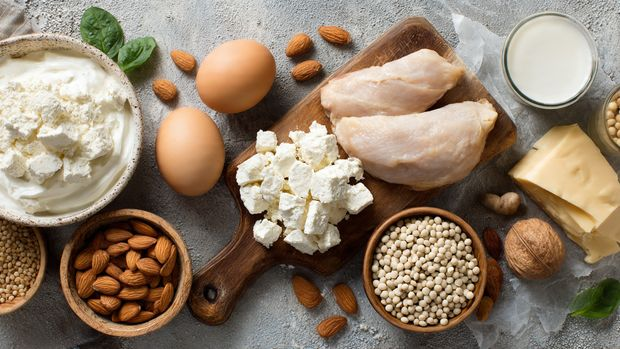
~ Pre-workout: Light protein (if not training fasted) → yogurt, amino-rich smoothie, eggs, paneer
~ Post-workout (higher urgency): 20–30 g protein within 1–2 hours
~ Meals: Ensure strong lunch + early dinner protein
If You Train in the Afternoon
~ Meals earlier in the day already support muscle protein synthesis
~ Post-workout protein is useful but not urgent, anytime within 2-4 hours is fine
If You Train in the Evening
~ Post-workout protein matters if you haven’t eaten much during the day
~ Favor balanced dinner protein earlier in the evening
If You Train Late at Night (After 8:30 PM)
~ Avoid large meals
~ Choose light protein such as whey isolate, Greek yogurt, or a small serving of paneer/chicken
~ Keep digestion gentle to protect sleep quality and circadian rhythm
If You’re Doing Cardio, Walking, Yoga, Pilates
~ No strict protein timing needed
~ Just meet daily protein goals across meals
If You’re 50+
~ More benefit from evenly spaced protein
~ Prioritize 25-35 g high-quality protein per meal for better muscle response.
This framework applies mainly to resistance training. Protein needs differ for cardio, yoga, and older adults
This distribution ensures your body gets regular amino acid pulses balancing “readiness before workout,” “supply after workout,” and “recovery overnight.”
This way, you’re giving your body regular doses of those all-important amino acids while keeping your protein game strong throughout the day. Balance is key, and sticking to a plan like this can make a world of difference for your muscle-building journey!
Lesson 4: Timing Matters More in Special Scenarios, Adjust Based on Your Routine
Alright, here’s the deal: for most of us, hitting the gym casually, worrying about when to eat protein, isn’t something we need to stress over. But there are those specific situations that call for a little more attention to timing. Let’s dive into when it really matters!
When timing could be more relevant
Fasted training sessions: If you’re the kind of person who likes to hit the gym first thing in the morning without breakfast, you might want to pay attention to your protein intake post-workout. After all, if you wake up and dive straight into your session, your amino acid levels might be lower than usual. Experts suggest that your recovery window could be a bit narrower, so a good protein-packed breakfast is your best friend here!
High training frequency/volume: If you’re putting in the hours with multiple workouts in a day or back-to-back intense sessions, making sure you’re consuming protein around your workouts is crucial. It’s all about helping your body recover so you can train effectively without hitting a wall.
Caloric deficit / weight-loss phase while preserving muscle: If you’re trying to shed some pounds but don’t want to lose any muscle along the way, timing your protein intake around workouts can be a game-changer. When calories are restricted, ensuring you get your protein when it counts helps preserve that hard-earned muscle.
Older adults or those with anabolic resistance: As we age, our muscles can become a bit less responsive to protein. So if you’re in this group, try to get those amino acids shortly after your workout, or make sure you’re getting a good amount in at each meal, especially before bed. It can really help stave off muscle loss.
What to do if you fall into these scenarios
~ Try to schedule a protein-rich meal or shake before or shortly after workouts.
~ Spread your protein intake evenly across your meals throughout the day.
~ Consider incorporating some slow-digesting protein like casein or cottage cheese before bedtime, especially if you’re lifting heavy or trying to keep your muscle mass.
Pink Tiger Verification: Trusted Supplements for Better Results
When protein timing matters, the quality of your protein matters even more. Pink Tiger Verified supplements ensure you’re using products that are authentic, clean, and accurately labeled. Each verified protein powder is tested for purity, safety, and true protein potency, helping you maximise muscle recovery without worrying about adulteration or hidden fillers.
Choosing Pink Tiger Verified options simply means you’re fuelling your workouts with trusted, reliable nutrition.
Putting It All Together: A Practical Protein Timing Strategy
Here’s a simple plan to follow that can work wonders for most gym-goers aiming to build muscle:
1. Calculate your daily protein target: Aim for about 1.6-2.2 grams of protein per kilogram of your body weight. This varies based on how hard you train and your personal goals.
2. Spread your protein: Try to distribute that protein evenly across 3-5 meals each day, going for around 20-40 grams per meal.
3. Pre-Workout Fuel: If you can, have a meal rich in carbs and protein about 1-2 hours before you hit the gym. If time’s not on your side, a quick protein snack can do the trick!
4. Post-Workout Recovery: Don’t sweat it if you can’t have that shake the second you’re done. Focus on a well-balanced meal within 2-4 hours after your workout instead.
5. End Your Day Right: A solid protein-rich dinner or a pre-bed snack helps your body recover while you sleep, so don’t skip it!
6. Adjust strategy based on your schedule: Remember to tweak your approach depending on whether you train fasted, have multiple sessions, or are in a calorie deficit.
READ OUR BLOGS TO KNOW MORE :



Common Myths & Clarifications
1. Myth: You must consume protein within 30 minutes post-workout.
Reality: Relax! The “anabolic window” is actually much wider. Your muscles stay sensitive for hours, so just focus on your daily protein intake.
2. Myth: Post-workout shake = better gains than whole-food meals.
Reality: As long as you’re hitting your total protein goals, whole foods can be just as effective throughout your day.
3. Myth: Training in a fed state makes protein timing irrelevant.
Reality: While it might reduce the urgency, if you train fasted or often, strategic timing can still make a difference.
4. Myth: Older folks can skip nutrition strategy; the same rules apply.
Reality: Actually, older adults have more to gain from consistent protein timing due to age-related muscle changes.
Conclusion: The Smart, Flexible Approach to Protein Timing
Good news! If you’ve ever been panicked about missing that 30-minute post-workout “anabolic window,” you can take a deep breath. The latest research shows that what really counts is hitting those daily protein targets, spreading that protein out intelligently across your meals, and planning around your workouts.
That said, timing can still matter in certain cases, like fasted workouts or when you’re on a calorie-cutting mission. So for most of us, a flexible, realistic, and evidence-backed approach will get us where we want to be.
So, next time you finish your workout and don’t have that protein shake ready, don’t freak out! Keep your focus on the bigger picture: enjoy those protein-rich meals, maintain consistent intake, and keep your nutrition smart around your workouts. That’s the secret sauce to making the most of your “anabolic window”!
Frequently Asked Questions (FAQs)
1. Does protein timing really matter for muscle growth?
Protein timing matters in specific scenarios, like fasted morning workouts, resistance training, older adults, and high-volume sessions. However, for most people, total daily protein intake has a far greater impact on muscle growth than the exact minute you consume it.
2. Is the anabolic window real or a myth?
It’s real, but not as narrow as once believed. Research shows the anabolic window lasts 2–4 hours, not 30 minutes. It mainly applies to resistance training, not light cardio, yoga, or walking. Your overall protein intake before and after training influences how long this window stays open.
3. Does protein timing differ for cardio and yoga?
Yes. Protein timing is most beneficial for strength training. Light-to-moderate cardio, yoga, walking, or mobility sessions don’t require precise timing. Just aim to meet your daily protein needs throughout the day.
4. Is protein timing more important for morning workouts or evening workouts?
Protein timing matters more in morning or fasted sessions because amino acid levels are lower. Evening sessions usually follow meals, so the urgency is lower. However, late-night workouts should not be followed by heavy meals, choose lighter, easy-to-digest protein instead.
5. How important is protein timing for fat loss?
Protein timing during a calorie deficit can help preserve muscle. A protein-rich meal pre- and post-workout supports recovery and prevents muscle loss, even if total calories are lower. But daily intake still matters far more than timing.
References:
1. Lak M, Bagheri R, Ghobadi H, Campbell B, Wong A, Shahrbaf A, Shariatzadeh M and Dutheil F (2024) Timing matters? The effects of two different timing of high protein diets on body composition, muscular performance, and biochemical markers in resistance-trained males. Front. Nutr. 11:1397090. doi: 10.3389/fnut.2024.1397090
2. Mutascu, D. (2025, August 27). Protein timing: Does the “Anabolic window” science still matter in 2025? Physion Dynamics. https://www.physiondynamics.com/post/protein-timing-does-the-anabolic-window-science-still-matter-in-2025
3. Casuso, R. A., & Goossens, L. (2025). Does Protein Ingestion Timing Affect Exercise-Induced Adaptations? A Systematic Review with Meta-Analysis. Nutrients, 17(13), 2070. https://doi.org/10.3390/nu17132070
4. Schoenfeld, B.J., Aragon, A.A. & Krieger, J.W. The effect of protein timing on muscle strength and hypertrophy: a meta-analysis. J Int Soc Sports Nutr 10, 53 (2013). https://doi.org/10.1186/1550-2783-10-53
5. FitnessRec. (n.d.). FitnessReC – Science-Based fitness & Nutrition Tracker. FitnessRec. https://fitnessrec.com/articles/the-anabolic-window-myth-evidence-based-post-workout-nutrition-for-athletes
6. Nunez, K. (2020, June 22). What is an anabolic window? Healthline. https://www.healthline.com/health/fitness-exercise/anabolic-window
7. Monk, J. (2023, March 17). Maximizing Muscle Growth: The Truth about protein timing and Intake – The Nutrition Monkey. The Nutrition Monkey. https://www.thenutritionmonkey.com/journal/2023/3/15/the-anabolic-window-fact-or-fiction
8. Devkota, A., Gautam, M., Dhakal, U., Devkota, S., Gupta, G. K., Nepal, U., Dhuru, A. D., & Singh, A. K. (2024, October 21). The interplay between physical activity, protein consumption, and sleep quality in muscle protein synthesis. arXiv.org. https://arxiv.org/pdf/2410.16169
9. Kim, S., Baek, J., & Kim, M. S. (2025). The Link Between Dietary Timing and Exercise Performance Through Adipocyte AMPKα2 Signaling. International Journal of Molecular Sciences, 26(13), 6061. https://doi.org/10.3390/ijms26136061
10. Alum, E.U. Circadian nutrition and obesity: timing as a nutritional strategy. J Health Popul Nutr 44, 367 (2025). https://doi.org/10.1186/s41043-025-01102-y