Food Label Truths: 6 Hidden Risks That Harm Your Gut Health

Food Label reading is no longer optional, it’s the single most powerful habit you can build to protect your gut health, avoid chronic inflammation, and stay safe from the rising wave of adulteration in packaged foods. Yet, most people still judge food by the front packaging: attractive fonts, health claims, buzzwords like “natural”, “multigrain”, “fortified”, or “high-protein”.
But here’s the hard truth: the real story is always at the back of the pack.
Ask yourself, when was the last time you flipped the packet and actually read the label?
If your answer is “rarely,” you’re unintentionally putting your gut at risk.
In recent, multiple research papers, government-led investigations, and global food safety alerts have revealed how everyday packaged foods hide gut-damaging ingredients, from refined oils to emulsifiers, artificial sweeteners, stabilizers, and even toxic contaminants.
This blog uncovers the 6 hidden risks inside food labels that silently harm your gut health, backed by the latest scientific insights and teaches you exactly how to decode labels smartly.
Table of Contents
Why Gut Health Begins With Label Literacy
We live in the era of heavily processed foods. Brands know how to market; customers must learn how to read.
In 2024, when palm oil and palmolein suddenly made headlines, people were shocked to realize how much of it they were consuming daily often without knowing. From chips and cookies to peanut butter, breads, instant noodles, protein bars, fried snacks, and even skincare products, palm oil quietly existed everywhere.
And the worst part? Most people consumed it because they didn’t read the ingredients list.
If a single ingredient can remain hidden in plain sight, imagine what else goes unnoticed.
This is exactly why label reading is now the NEW IMPORTANT.
Why Food Label Matter for Your Gut Health
The connection is simple: Your gut depends on what you feed it and food labels tell you what you’re actually feeding it.
Recent reviews highlight that several common food additives, even within legal limits, can:
- disrupt gut microbiota balance
- reduce beneficial bacteria
- trigger inflammation
- impair gut barrier integrity
- influence metabolic health and weight
- increase risk of colorectal cancer
A major 2024 review on food additives and gut health, Effects of Food Additives on Gut Microbiota (2024), explains how emulsifiers, stabilizers, sweeteners, and preservatives can disturb microbiota composition and immune balance.
When you flip the packet and read what goes into your food, you become aware of the ingredients that harm your gut and can consciously avoid them.
Being aware is the first step toward prevention.
How Food Label Reading Protects Your Gut: What New Research Shows
Understanding food labels allows you to:
- Compare products and choose better alternatives
- Identify harmful additives, refined oils, artificial sweeteners, or high-sugar items
- Pick foods richer in gut-supportive nutrients
- Avoid emulsifiers that may disrupt gut lining
- Reduce ultra-processed food intake
- Minimize exposure to inflammatory ingredients
These choices directly influence gut microbiota diversity and inflammation levels.
A 2025 review, Ultra-Processed Food and Gut Microbiota (2025), highlights that UPFs commonly contain additives (emulsifiers, flavor enhancers, sweeteners) known to drive dysbiosis and low-grade inflammation both major triggers of gut disorders.
By simply reading labels, you lower your exposure to these hidden gut disruptors.
Food Label Truths: 6 Hidden Risks That Harm Your Gut Health
Below are the six most overlooked label components that significantly impact your gut health backed by recent research.
1. Emulsifiers: The Silent Destroyers of Gut Lining
Emulsifiers like:
- Polysorbate 80
- Carboxymethylcellulose
- Mono- & diglycerides
- Carrageenan
- Guar gum
- Xanthan gum
are widely used in bread, ice creams, sauces, chocolates, and processed foods.
A groundbreaking study Direct Impact of Commonly Used Emulsifiers on Human Gut Microbiota (2021) found that even low, legal doses can:
- reduce beneficial bacteria
- promote inflammatory bacteria
- thin the mucus layer
- impair gut barrier function
The 2024 review Effects of Food Additives on Gut Microbiota (2024) also confirms that emulsifiers consistently disrupt microbial stability.
If you see these ingredients on a label, think twice.
2. Refined Oils & Palm Oil: Triggers for Inflammation and Dysbiosis
Palm oil and refined seed oils are commonly used because they’re cheap and shelf-stable. But they come with gut risks.
A 2025 study, Effect of Dietary Oils on Serum Lipids and Gut Microbiota (2025), showed that different oils significantly alter gut microbiota composition and metabolic markers. Diets high in saturated/refined oils:
- reduced gut microbial diversity
- increased inflammatory markers
- disrupted lipid metabolism
Meanwhile, healthier oils like olive, flaxseed, or cold-pressed alternatives support microbial balance, as mentioned in Edible Plant Oils and Gut Microbiota (2024).
Always check the oil source on the label.
3. Artificial Sweeteners: “Sugar-Free” Doesn’t Mean Gut-Friendly
Sugar-free products may hide:
- sucralose
- aspartame
- acesulfame-K
- saccharin
- maltitol
Multiple reviews from 2024 show that artificial sweeteners modify gut bacteria and raise glucose intolerance risk.
The 2024 review Impacts of Food Additives on Gut Microbiota (2024) highlights that artificial sweeteners can promote dysbiosis, reduce SCFA production, and potentially increase metabolic disease risks.
4. Preservatives & Stabilizers That Trigger Inflammation
Common preservatives include:
- sodium benzoate
- potassium sorbate
- nitrates/nitrites
- BHA/BHT
While approved in limited amounts, repeated exposure through UPFs is harmful. Research compiled in Impacts of Food Additives on Gut Microbiota (2024) indicates that some preservatives:
- impair microbiota composition
- reduce beneficial bacteria
- may increase inflammation
Your gut is sensitive, even “small amounts” matter when consumed daily.
5. Hidden Sugars That Hurt Your Gut & Liver
Food labels often hide sugar under names like:
- maltose
- dextrose
- glucose syrup
- maltodextrin
- fructose corn syrup
High sugar intake feeds harmful bacteria and yeasts, promoting dysbiosis and inflammation.
A bibliometric analysis, Impact of Ultra-Processed Foods on Gut Microbiota (2024), confirms that high-sugar formulations in UPFs strongly correlate with altered microbiota diversity.
6. Ultra-Processed Food Ingredients (UPFs): The Full Package of Gut Disruption
If the ingredient list reads like a chemistry lab, it’s a red flag. UPFs often contain:
- colors
- flavors
- stabilizers
- texture agents
- preservatives
- emulsifiers
- refined oils
- hidden sugars
The 2025 review Ultra-Processed Food and Gut Microbiota (2025) clearly states that UPFs promote gut dysbiosis, barrier dysfunction, and chronic inflammation regardless of calorie count.
This means: Even low-calorie UPFs damage your gut.
How to Read and Use Food Labels for Gut Health
Food labels contain crucial information that helps you make smarter gut-friendly choices. Here’s how to decode them:
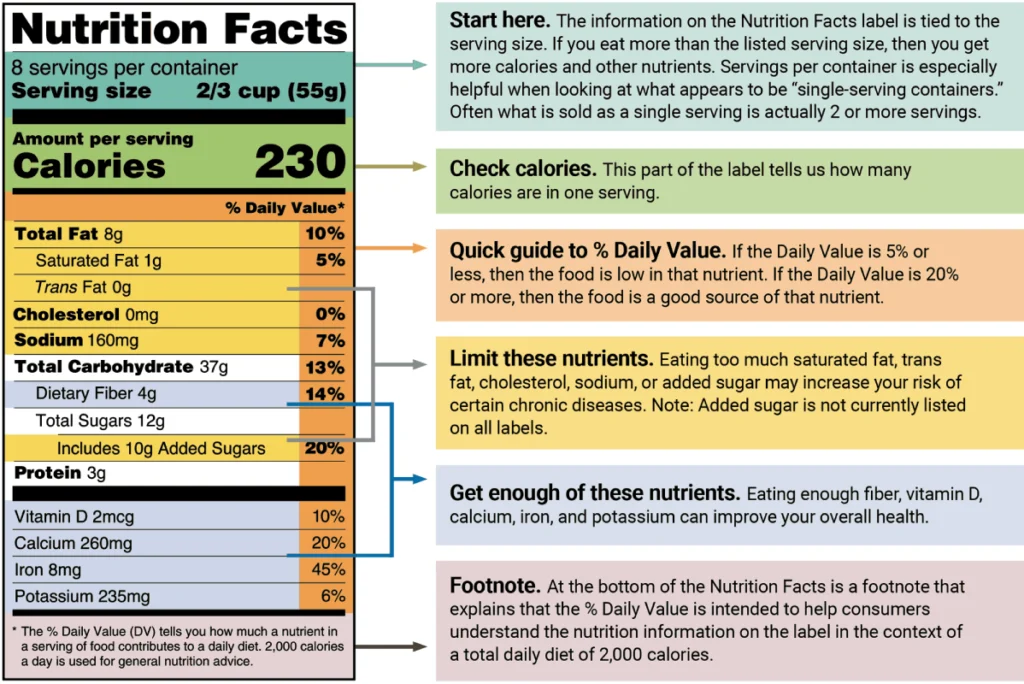
1. Nutrition Facts Table
The Nutrition Facts Table (NFT) helps you quickly understand what you’re eating. It lists the serving size, calories, nutrients, and % Daily Value (DV) so you can compare foods and choose healthier options.
✔ Serving Size
Always check this first.
All the numbers on the label are based on this amount. If you eat more than the serving size, the calories and nutrients multiply too.
✔ % Daily Value
The %DV shows how much a nutrient in one serving contributes to your daily needs:
- 5% DV or less = low
- 15% DV or more = high
This simple rule helps you quickly judge whether a nutrient is present in small or large amounts.
What to Pay Attention To
Fiber : Choose Higher
Fiber supports digestion and gut health.
Look for products with higher fiber %DV to keep your gut bacteria healthy.
Saturated Fat : Choose Lower
High saturated fat can increase inflammation and affect heart health.
Try to pick foods that are low in saturated fat (close to or under 5% DV).
Sugar : Watch the Amount
Keep sugar lower to avoid blood sugar spikes and gut-microbiota imbalance.
Check both the grams of sugar and the ingredient list for names of added sugars.
Sodium : Keep It Low
Sodium adds up quickly in packaged foods and can contribute to bloating and high blood pressure.
Look for products with lower sodium (preferably under 10% DV).
2. Ingredient List
When you look at an ingredient list, the items are arranged from highest to lowest quantity. This means the first three to five ingredients make up most of what you’re actually eating. If those first few ingredients are unhealthy, the product is likely not a good choice, regardless of what the front label claims.
What to Avoid (and Why)
Palm Oil & Refined Oils
Palm oil, sunflower oil, soybean oil, and other refined oils are heavily processed and often high in omega-6 fats. Excess intake may promote inflammation and can negatively influence gut balance. These oils are commonly used in ultra-processed foods because they are cheap and shelf-stable not because they support health.
Emulsifiers
Ingredients like polysorbate-80, carrageenan, mono- and diglycerides, and carboxymethylcellulose help improve texture and shelf life.
But research shows they may disrupt the gut lining, change the gut microbiota, and increase inflammation in some individuals. Regular intake through processed foods is best limited.
Artificial Sweeteners
Sucralose, aspartame, acesulfame-K, and saccharin are marketed as “sugar-free,” but studies indicate they may alter gut bacteria, increase sugar cravings, and affect glucose response in certain people. They’re common in “diet,” “zero,” or “low-calorie” products.
High-Sugar Syrups
High-fructose corn syrup, glucose syrup, invert syrup, maltodextrin, and caramel syrup spike your blood sugar quickly. They may also feed harmful gut bacteria and contribute to weight gain when consumed frequently.
Artificial Colors & Flavors
These synthetic additives enhance appearance and taste but offer no nutritional value. Some colorants and artificial flavors have been linked to hyperactivity in children and gut irritation in sensitive individuals.
What to Prefer (and Why)
Whole, Real Ingredients
Foods made with ingredients you recognize like nuts, seeds, grains, fruits, vegetables, herbs, and spices are naturally nutrient-dense and better for digestion, metabolism, and long-term health.
Short Ingredient Lists
A shorter list usually means minimal processing. This helps you avoid unnecessary additives while keeping the nutritional value closer to whole foods.
Identifiable Foods
If you can picture the ingredient in its natural form like oats, cocoa, peanuts, or chickpeas, it’s typically a better choice than something made from chemical extracts or synthetic compounds.
3. Nutrition & Health Claims on Food Label
“Low fat,” “multigrain,” “fortified,” “natural,” or “lite” can be misleading.
A product can meet criteria for a claim and STILL be unhealthy.
Always flip the pack to read the actual ingredient list.
4. Food Allergen Labels
Crucial for allergies and intolerances, pay attention to:
- gluten
- nuts
- dairy
- soy
Even trace amounts can irritate sensitive guts.
5. Date Labels
Best-before vs. expiry matters. If you’re unsure about freshness or storage, return the product.
Pink Tiger Verification
That’s why Pink Tiger does the job for you, by verifying products for quality, purity, and safety, it ensures that what you consume is free from harmful additives, adulterants, and misleading claims, helping you make informed, gut-friendly, and health-conscious choices.
The Bottom Line
Reading Food Labels is not just about counting calorie, it’s about protecting your gut, your long-term health, and your everyday well-being. In a world where packaged foods can hide dozens of additives, cheap refined oils, artificial sweeteners, preservatives, and synthetic ingredients, understanding labels has become an essential life skill, not a health enthusiast’s hobby.
Your gut does far more than digest food. It influences your immunity, your energy, your mood, and even your hormone balance. This is why scientists often call it your “second brain.”
So the next time you pick up a packet, flip it over and read the food label.
Look beyond the branding. Notice the ingredients. Question the additives. Make the choice that your gut will thank you for.
Nourish your gut with foods that heal, not harm.
Because caring for your gut is one of the simplest and most powerful steps you can take for a healthier, more resilient you.
Frequently Asked Questions (FAQs)
1. Why is reading a food label important for gut health?
Food labels reveal hidden additives, emulsifiers, oils, and sweeteners that may disrupt your gut microbiome. Understanding them helps you avoid ingredients that trigger inflammation or digestive issues.
2. Can food labels help reduce the risk of diseases?
Yes. By helping you avoid harmful additives and choose nutrient-dense options, food labels support better digestion, reduced inflammation, and lower long-term risks like metabolic disorders or gut-related diseases.
3. Why should I read food labels?
Reading labels helps you understand what you’re eating, identify harmful additives, compare products, and choose foods that support overall health, especially gut health.
4. What information is included on a food label?
A food label provides essential information about a packaged product, including the ingredient list (from highest to lowest quantity), nutrition facts (calories, macronutrients, fiber, sugar, vitamins), allergen warnings (nuts, gluten, dairy, soy), serving size, % Daily Values to show nutrient contribution, and date labels like “best before” or “expiry.” Reading all these sections helps you make smarter, gut-friendly choices and avoid hidden additives, refined oils, or sugars that may harm your health.
5. What do health or nutrition claims on food labels mean?
Claims like “low fat,” “sugar-free,” or “high in fiber” must meet certain criteria but don’t guarantee the product is healthy. Always check the ingredients.
Disclaimer: Please keep your healthcare provider in the loop before introducing any new food item or beauty product into your lifestyle, especially if you have a medical health condition or are on medications. In case you are allergic to certain foods, please avoid them.
References :
1. Ivanovic, N., & Dimitrijevic Brankovic, S. (2024). EFFECTS OF FOOD ADDITIVES ON GUT MICROBIOTA: WHAT’S NEW IN 2024. In Microb Health Dis (Vol. 6, p. e1106). https://www.microbiotajournal.com/wp-content/uploads/sites/7/2024/09/e1106.pdf
2. Ping Li, Ru Qu, Ming Li, Ping Sheng, Liang Jin, Xiaochang Huang, Zhenjiang Zech Xu,
Impacts of food additives on gut microbiota and host health, Food Research International, Volume 196, 2024, 114998, ISSN 0963-9969, https://doi.org/10.1016/j.foodres.2024.114998.
3. Bevilacqua, A., Speranza, B., Racioppo, A., Santillo, A., Albenzio, M., Derossi, A., Caporizzi, R., Francavilla, M., Racca, D., Flagella, Z., De Santis, M. A., Elia, A., Conversa, G., Luchetti, L., Sinigaglia, M., & Corbo, M. R. (2025). Ultra-Processed Food and Gut Microbiota: Do Additives Affect Eubiosis? A Narrative Review. Nutrients, 17(1), 2. https://doi.org/10.3390/nu17010002
4. Rondinella, D., Raoul, P. C., Valeriani, E., Venturini, I., Cintoni, M., Severino, A., Galli, F. S., Mora, V., Mele, M. C., Cammarota, G., Gasbarrini, A., Rinninella, E., & Ianiro, G. (2025). The Detrimental Impact of Ultra-Processed Foods on the Human Gut Microbiome and Gut Barrier. Nutrients, 17(5), 859. https://doi.org/10.3390/nu17050859
5. Zhu, T., Kuai, Y., Guo, X., Bu, G., Yang, C., & Chen, F. (2025). Effect of Dietary Oils with Different Fatty Acid Compositions on Serum Lipid and Gut Microbiota of Rats. Foods, 14(1), 61. https://doi.org/10.3390/foods14010061
6. Zou Q, Chen A-Q, Huang J, Wang M, Luo J-H, Wang A and Wang X-Y (2024) Edible plant oils modulate gut microbiota during their health-promoting effects: a review. Front. Nutr. 11:1473648. doi: 10.3389/fnut.2024.1473648
7. Rondinella, D., Raoul, P. C., Valeriani, E., Venturini, I., Cintoni, M., Severino, A., Galli, F. S., Mora, V., Mele, M. C., Cammarota, G., Gasbarrini, A., Rinninella, E., & Ianiro, G. (2025). The Detrimental Impact of Ultra-Processed Foods on the Human Gut Microbiome and Gut Barrier. Nutrients, 17(5), 859. https://doi.org/10.3390/nu17050859