Artificial Sweeteners: 7 Hidden Risks in Sugar-Free Foods
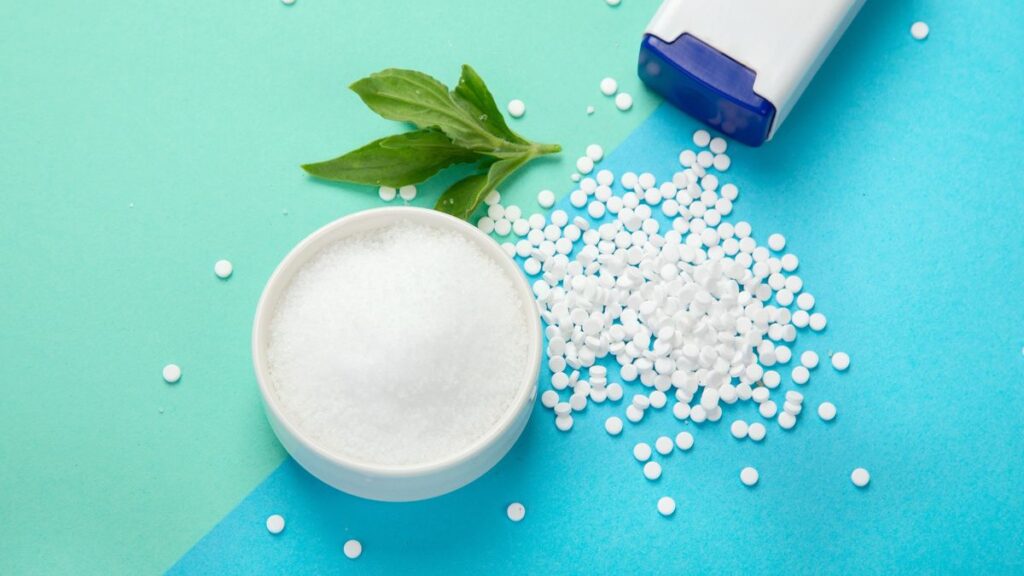
It’s often assumed that anything labelled “sugar-free” or “zero calorie” is automatically better. Especially when it’s wrapped in shiny wellness branding and promises of guilt-free indulgence.
Framed as healthier alternatives to sugar, artificial sweeteners are marketed as the smarter choice for weight loss and blood sugar control. But the conversation around their long-term impact is far from settled.
Table of Contents
Introduction
Walk through any supermarket aisle today and you’ll see an explosion of products labelled “sugar-free,” “zero calorie,” “diet,” “lite,” or “no added sugar.” From protein bars and energy drinks to flavoured yogurts and “guilt-free” desserts; artificial sweeteners have quietly slipped into our daily diets under the promise of being the smarter choice.
We reach for them believing they’ll help with weight loss, blood sugar control, or simply because they sound “healthier” than regular sugar. And why wouldn’t we? The marketing is slick, the packaging is shiny, and the idea of indulging without consequences is hard to resist.
But beneath this wellness-wrapped promise lies a growing body of research that paints a far more complicated picture.
This blog takes a deeper look at artificial sweeteners, their rise, how they work, their FSSAI status, and the 7 critical health risks that most people unknowingly ignore.
What Exactly Are Artificial Sweeteners?
Artificial sweeteners are chemically synthesised sugar substitutes designed to deliver intense sweetness with little to no calories. Most are classified as non-nutritive sweeteners (NNS), meaning they offer sweetness without contributing any meaningful energy.
To put their sweetness into perspective:
- Aspartame – 200x sweeter than sugar
- Sucralose – 600x sweeter
- Saccharin – 300–400x sweeter
- Acesulfame-K – 200x sweeter
Their high sweetness allows manufacturers to use extremely small amounts, making them ideal for “low-calorie” and “diet” formulations.
How They Behave in the Body
Unlike glucose or fructose, these sweeteners don’t follow normal metabolic pathways. Most of them pass through the gut unchanged, while others are broken down through alternate biochemical routes that have minimal impact on blood sugar.
This makes them especially popular in:
1. Weight-Loss Diets
Artificial sweeteners are popular in weight-loss plans because they provide sweetness without calories. They are often used in diet snacks and low-calorie desserts to help reduce energy intake. However, their intense sweetness may increase cravings and appetite, making long-term weight management more challenging.
2. Diabetes Management
For those with diabetes, artificial sweeteners seem helpful as they don’t raise blood sugar directly. They are commonly included in diabetic-friendly beverages and snacks. But research shows they may still affect glucose control indirectly through gut bacteria changes and altered insulin signalling.
3. Low-Carb or Ketogenic Lifestyles
Low-carb and keto diets avoid sugar completely, so artificial sweeteners are used to keep foods palatable without breaking carb limits. While they allow for sweet-tasting treats, some may still trigger hunger or insulin responses that can interfere with ketosis in sensitive individuals.
4. Fitness Supplements
Pre-workouts, BCAAs, and protein powders rely on artificial sweeteners to taste good without adding calories. This leads to frequent consumption among fitness enthusiasts. Over time, this high exposure may impact digestion, gut health, or taste preference for real foods.
5. Beverages and Snacks Marketed as “Clean”
“Clean” or “zero sugar” beverages and snacks often use artificial sweeteners to appear healthier. While they seem like better choices, these products may still influence cravings, metabolism, and gut balance, making them less wholesome than they appear.
But the question is, does “no sugar” automatically mean “healthier”? Not quite.
A look at FSSAI-approved sweeteners
The Food Safety and Standards Authority of India (FSSAI) permits certain artificial sweeteners in packaged foods and beverages. Each of these comes with a safety benchmark known as the Acceptable Daily Intake (ADI), a maximum amount considered safe to consume daily over a lifetime.
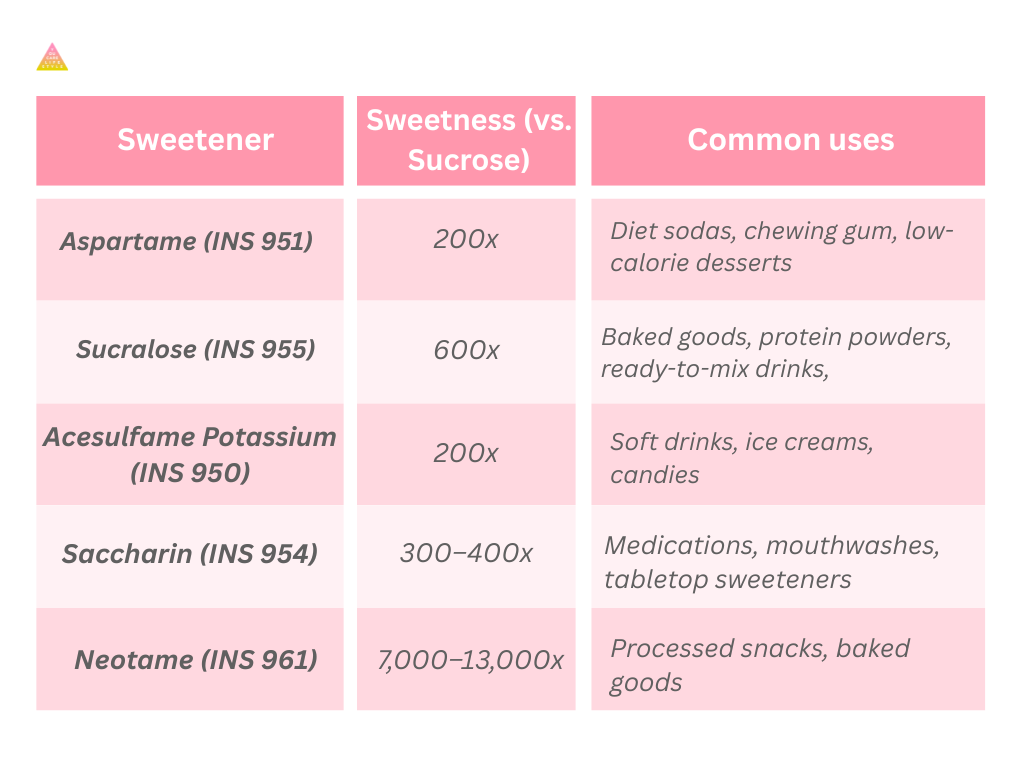
In India, sweeteners used in packaged foods must be approved by the Food Safety and Standards Authority of India (FSSAI). Commonly permitted sweeteners include:
- Aspartame (INS 951)
- Sucralose (INS 955)
- Acesulfame Potassium (INS 950)
- Saccharin (INS 954)
- Neotame (INS 961)
- Steviol Glycosides (INS 960) – plant-derived but still regulated
Each sweetener has an Acceptable Daily Intake (ADI), a maximum safe amount you can consume daily over a lifetime. The problem? Most people have no idea they are consuming these additives from multiple sources every single day.
Think about it: Your morning protein mix, the “zero sugar” beverage at lunch, the “diet” dessert after dinner, all of these can cumulatively push intake well beyond what we assume.
The worry is no longer about occasional consumption, but long-term, chronic exposure.
The Not-So-Sweet Side: 7 Critical Health Risks Most People Ignore
Despite their benefits, research from the last decade, especially between 2022 to 2025 has raised significant concerns about how artificial sweeteners may affect long-term health.
Here’s what scientific evidence reveals:
1. Disrupted Glucose Response
Even though artificial sweeteners do not raise blood sugar directly, their indirect effects can still impair glucose tolerance.
A 2022 paper in Nutrients (Iizuka) showed that saccharin can alter gut microbiota, triggering glucose intolerance in otherwise healthy individuals. This means a sweetener marketed for “blood sugar control” may ironically increase metabolic risk.
Other studies show similar findings for sucralose and aspartame, particularly when consumed regularly.
In simple terms:
Your body thinks it’s getting sugar, prepares for glucose, but gets none. This mismatch can disturb insulin signalling over time.
2. Impact on Gut Health
Our gut microbiome is extremely sensitive to chemical additives—including sweeteners.
A 2023 review in Nutrients (Conz, Salmona & Diomede) found that sweeteners like sucralose and aspartame reduce beneficial gut bacteria, altering microbial diversity.
Reduced microbial diversity is associated with:
- Poor digestion
- Increased inflammation
- Lowered immunity
- Reduced nutrient absorption
- Higher susceptibility to metabolic diseases
Some studies even show that sucralose can reduce the number of anaerobic gut bacteria by nearly 50%.
The gut is the foundation of our health—anything that disturbs its balance deserves serious attention.
3. Metabolic Mismatch & Increased Cravings
Artificial sweeteners trigger sweet taste receptors without delivering calories. This creates what experts call a metabolic mismatch.
A 2022 review (Wilk et al.) found that this disconnect may lead to:
- Increased cravings
- Higher hunger levels
- Confusion in appetite-regulating hormones
- Reduced satiety
- Compensatory overeating later
This is exactly why many people who switch to “diet” foods often don’t lose weight—and sometimes gain more.
Your body senses sweetness → expects calories → doesn’t receive them → demands more food.
4. Neurological & Mood Impacts
Aspartame is one of the most controversial sweeteners, despite being widely used in diet sodas, protein powders and flavoured supplements.
A 2024 study in International Immunopharmacology (Dar) revealed that high intake of aspartame may lead to:
- Headaches
- Mood disturbances
- Irritability
- Anxiety-like symptoms
- Cognitive impairment
Researchers attribute these effects to microglia-mediated neuroinflammation, meaning inflammation in the brain’s immune cells.
While occasional consumption may not harm everyone, individuals with sensitivity can experience noticeable symptoms even at lower doses.
5. Increased Cardiovascular Risk
The NutriNet-Santé cohort (BMJ, 2022) tracked over 100,000 participants and found a concerning association:
Regular consumption of artificial sweeteners—especially aspartame and acesulfame-K—was linked with an increased risk of cardiovascular disease, including stroke.
While this research does not conclusively prove causation, the correlation is strong enough to warrant caution.
Given the high prevalence of heart disease in India, this is not a risk to ignore.
6. Psychological Loopholes & Overcompensation
“Diet” or “zero-calorie” products often create a false sense of safety.
People may think:
- “It’s sugar-free, so I can have more.”
- “I saved calories at lunch, so dessert is fine.”
- “Diet soda won’t affect my weight anyway.”
This behavioural phenomenon, known as “diet compensation,” undermines weight-loss goals and leads to higher calorie consumption overall.
Marketers know this. That’s why “diet” foods are engineered to taste good—so you keep coming back.
7. Long-Term Dependency on Hyper-Sweet Foods
The biggest problem with artificial sweeteners isn’t just their physiological impact—
it’s that they keep us addicted to sweetness.
When the palate becomes accustomed to extreme sweetness (200–600x sweeter than sugar), natural sweet foods—like fruit—begin to taste bland.
This rewiring leads to:
- Persistent sweet cravings
- Reduced satisfaction from whole foods
- Lower ability to enjoy naturally subtle flavours
- Higher risk of binge eating sweet-tasting foods
The real solution? Not replacing sugar with synthetic sweetness, but retraining the palate to appreciate less-sweet foods.
A smarter kind of sweet
The issue isn’t just what we use to sweeten our food but why we feel the need to sweeten everything in the first place.
Modern diets are wired for hyper-palatable foods and sweeteners (natural/ artificial) fuel that dependency. Instead of replacing sugar with its synthetic variants, the more sustainable solution may lie in recalibrating our taste buds and reducing the overall sweet cravings.
Instead of switching from sugar to artificial sweeteners, consider:
1. Reducing overall sweetness dependency
This is the most sustainable approach.
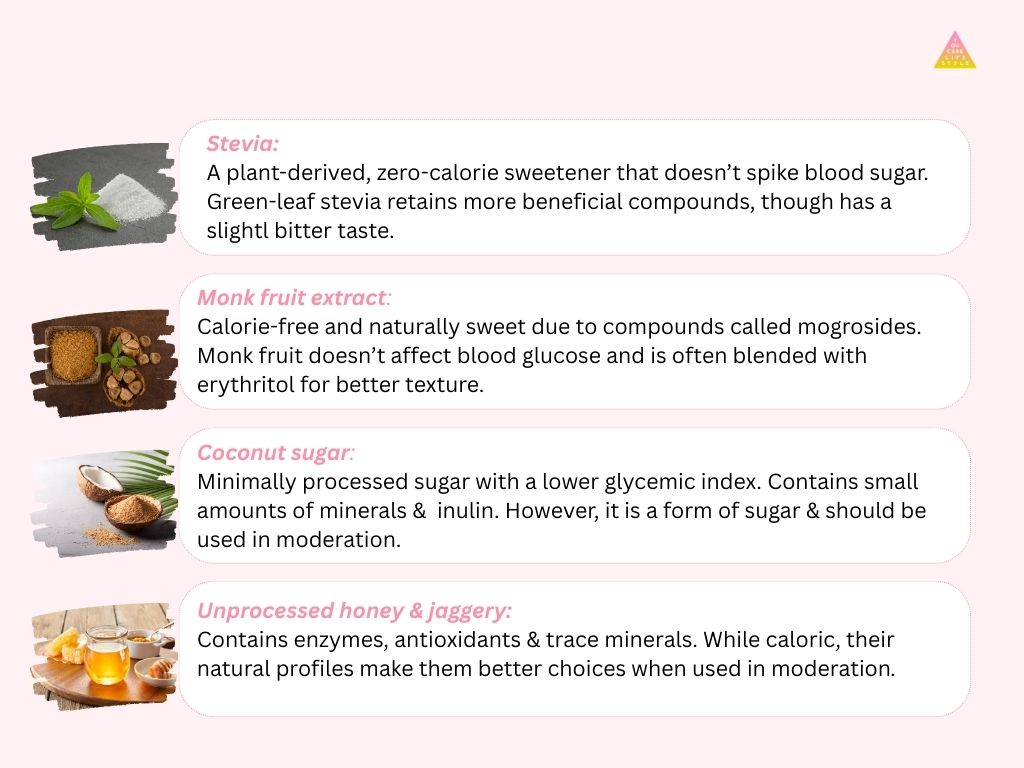
2. Using natural sweeteners mindfully
Such as:
- Raw honey
- Date paste
- Coconut sugar
- Jaggery
- Monk fruit
- Stevia (minimally processed)
3. Focusing on whole foods
The more whole foods you eat, the less your body will demand hyper-sweetened flavours.
4. Reading ingredient labels carefully
Sweeteners often hide under names like:
- Maltitol
- Isomalt
- Aspartame
- Sucralose
- Erythritol (a sugar alcohol, still controversial)
- Acesulfame-K
Awareness is the first step toward better choices.
That said, for those moments when a touch of sweetness feels necessary, there are more mindful alternatives available:
Be Informed, Not Influenced!
In the race to go “sugar-free,” we’ve handed our choices to shiny labels and clever marketing without always questioning what’s inside. But it’s time to pause. Read labels, ask questions and understand what those ingredients mean for your body.
Artificial sweeteners may offer a quick fix, but long-term health isn’t built on shortcuts. Most of us consume products without knowing their ingredients or the possible side effects they carry.
At YouCare Lifestyle, we believe that cleaner choices shouldn’t be confusing. That’s why our Pink Tiger Verified products are free from harmful additives, including artificial sweeteners. Each product goes through rigorous checks to ensure safety and transparency so you can trust what you bring home.

Conclusion
Artificial sweeteners may seem like a simple swap for sugar, but long-term health isn’t created through shortcuts. As new research shows, these additives affect far more than calories or blood sugar—they influence gut bacteria, metabolism, cravings, and even mood in subtle but significant ways. Instead of relying on “sugar-free” labels, the real path to better health lies in reducing our dependence on intensely sweet foods and rebuilding a more balanced relationship with taste.
By reading labels, understanding ingredient lists, and choosing cleaner, more transparent products, you regain control over what truly nourishes your body. Small, informed decisions made consistently can have a profound impact over time. Choosing clarity over convenience is the most powerful step you can take toward better health and more mindful eating.
Frequently Asked Questions (FAQs)
1. Are artificial sweeteners completely safe to consume?
Artificial sweeteners approved by FSSAI and international food authorities are considered safe within their Acceptable Daily Intake (ADI). However, newer studies suggest that long-term or excessive consumption may influence gut bacteria, appetite hormones, and glucose regulation. Individual tolerance also varies, some people may experience digestive discomfort, headaches, or mood changes. Occasional use is usually fine, but relying on them daily may carry risks.
2. Which artificial sweeteners are commonly used in India?
India’s FSSAI permits several sweeteners, including aspartame, sucralose, saccharin, acesulfame-K, neotame, and steviol glycosides. These are widely used in diet beverages, low-calorie snacks, flavoured yogurts, protein powders, and diabetes-friendly packaged foods. Each sweetener has an assigned ADI, meant to guide safe daily consumption. However, many people unintentionally exceed safe limits because these additives appear in multiple everyday products.
3. Are natural sweeteners better than artificial ones?
Natural sweeteners such as jaggery, raw honey, dates, coconut sugar, and monk fruit tend to be less processed and may offer trace minerals or antioxidants. They do raise blood sugar, but their effects are usually more predictable for the body. Artificial sweeteners, on the other hand, may disrupt gut health and appetite regulation when consumed frequently. Neither option should be overused, but natural sweeteners can be a gentler choice when used mindfully.
4. Can artificial sweeteners affect gut bacteria?
Yes, several studies show that sweeteners like sucralose, saccharin, and aspartame can alter the gut microbiome. They may reduce beneficial bacteria, disturb microbial diversity, and create an environment linked to inflammation or metabolic issues. Changes in gut bacteria can also influence cravings and glucose response. Over time, this imbalance may affect digestion, immunity, and overall well-being.
5. Do artificial sweeteners cause headaches or mood changes?
Some people are sensitive to specific sweeteners, especially aspartame, and may experience headaches, irritability, or mood shifts after consumption. Research suggests that these effects may be linked to neuroinflammation or changes in neurotransmitter pathways. Not everyone reacts this way, but frequent intake can increase the likelihood of symptoms. If you experience these issues, reducing or eliminating artificial sweeteners may help.
Disclaimer: This content is for informational purposes only and is not a substitute for professional medical advice, diagnosis or treatment. Always consult your healthcare provider before trying any new food items, supplements, or products.
References
1) Ghusn, W., Naik, R., & Yibrin, M. (2023). The Impact of Artificial Sweeteners on Human Health and Cancer Association: A Comprehensive Clinical review. Cureus. https://doi.org/10.7759/cureus.51299
2) Debras, C., Chazelas, E., Sellem, L., Porcher, R., Druesne-Pecollo, N., Esseddik, Y., De Edelenyi, F. S., Agaësse, C., De Sa, A., Lutchia, R., Fezeu, L. K., Julia, C., Kesse-Guyot, E., Allès, B., Galan, P., Hercberg, S., Deschasaux-Tanguy, M., Huybrechts, I., Srour, B., & Touvier, M. (2022). Artificial sweeteners and risk of cardiovascular diseases: results from the prospective NutriNet-Santé cohort. BMJ, e071204. https://doi.org/10.1136/bmj-2022-071204
3) Iizuka, K. (2022). Is the Use of Artificial Sweeteners Beneficial for Patients with Diabetes Mellitus? The Advantages and Disadvantages of Artificial Sweeteners. Nutrients, 14(21), 4446. https://doi.org/10.3390/nu14214446
4) Conz, A., Salmona, M., & Diomede, L. (2023). Effect of Non-Nutritive Sweeteners on the gut microbiota. Nutrients, 15(8), 1869. https://doi.org/10.3390/nu15081869
5) Wilk, K., Korytek, W., Pelczyńska, M., Moszak, M., & Bogdański, P. (2022). The effect of artificial sweeteners use on sweet taste perception and weight loss efficacy: a review. Nutrients, 14(6), 1261. https://doi.org/10.3390/nu14061261
6) Dar, W. (2024). Aspartame-induced cognitive dysfunction: Unveiling role of microglia-mediated neuroinflammation and molecular remediation. International Immunopharmacology, 135, 112295. https://doi.org/10.1016/j.intimp.2024.112295
7) Arshad, S., Rehman, T., Saif, S., Rajoka, M. S. R., Ranjha, M. M. a. N., Hassoun, A., Cropotova, J., Trif, M., Younas, A., & Aadil, R. M. (2022). Replacement of refined sugar by natural sweeteners: focus on potential health benefits. Heliyon, 8(9), e10711. https://doi.org/10.1016/j.heliyon.2022.e10711
8) FOOD SAFETY AND STANDARDS (LABELLING AND DISPLAY) REGULATIONS, 2020 https://fssai.gov.in/upload/uploadfiles/files/Compendium_Labelling_Display_04_01_2022.pdf
9) SUBSTANCES ADDED TO FOOD (FSSAI) https://www.fssai.gov.in/upload/uploadfiles/files/18_%20Chapter%203%20(Substances%20added%20to%20food)_compressed.pdf